You’re at the stage of your wedding planning where you’ve narrowed down your venues to those that would suit your plans well, and booked visits to see each of them.
But seeing all these venues can feel overwhelming. After the third or fourth visit, it can feel hard to keep all the details straight, and you can end up feeling confused about which one is the right venue for you. It can also be tricky to know what you should and can be asking the venue staff who shows you around.
This is where my step-by-step guide to viewing your wedding venue comes in. As an experienced Scottish wedding planner, I’m sharing the questions that I advise my couples to ask both the venue staff, and themselves, when looking around their potential venues.
These questions form a comprehensive overview of all a venue’s elements and how it could work for your wedding, from the logistics of how each room can be used to the experience that you and your guests will get.
At the end of the guide I’ve also included a downloadable scorecard that you can use when visiting your venue. Ask the questions I’ve listed in this guide during your visit, then score them once you’ve left. The score won’t make the decision for you, but it should make it much easier to see where the real differences are before you take that all-important final decision.
The overall feel to get from each visit
Look at each venue and start to picture your wedding there. Not just whether a room is beautiful on a Friday or Sunday morning, but how it might feel with your number of guests in it, where the ceremony would sit, how the outdoor space could be used, what dinner would feel like and how the atmosphere changes once everyone moves into the evening.
If you’ve created a brief for the look and style of your wedding, keep coming back to it and how it fits this potential venue. For example, I recently worked with a couple whose brief for their dream Scottish wedding was 80% Bridgerton, 20% Monarch of the Glen. This meant that their venue needed to have elegance, history and beautiful architecture, but also a real sense of Scotland. They also had a lot of family and friends travelling from the States, so the venue needed to feel worth the journey and somewhere they couldn’t have experienced anywhere else.
Look at what is already there in terms of furniture and decorations, and think about how you can work with it. Ask the venue staff how they would use each space for your wedding, and let them help you picture it.
Don’t worry too much at this stage about styling and finer logistics (especially if you’re working with a wedding planner) – that can come later. What’s important is that after each visit you have a really clear sense of which venues you connect with, which ones feel right, and where you can genuinely picture spending time with your friends and family.
During the viewing
As you walk around each venue, you should take these different parts of your wedding into consideration.
1. Picture the day
Try to picture the wedding as one full day rather than a series of separate events happening in separate rooms, so you can get a real sense of how your day would unfold.
As well as the interior spaces, consider the grounds around the venue, especially if you’re planning on having some of the wedding outside. Is there enough space for what you want to do? Are there areas where guests could shelter if it starts to rain?
Photography and possibly videography will likely play an important part of your day. Think about your photos – are there locations that would work for group shots and couple portraits? Do you like the backdrop that the venue and its grounds provide?
Questions to ask the venue staff include:
“With around [your number of] guests and a ceremony at approximately [your preferred time], how would you suggest we use the venue from arrival through to the end of the evening?”
“Which spaces would you suggest for the ceremony, drinks reception, dinner and evening?”
“Why do you think those work best for our number of guests?”
“How would you make the most of the venue for the style of wedding we’ve described?”
2. Getting ready
If you’re planning on getting ready at the venue, ask what spaces are available for each of you and your wedding parties. Do those rooms feel light, calm and spacious enough for getting ready, and for any photography you want?
Ask the venue staff how easily your can photographer move between both sides of the wedding, and where they would suggest doing a first look.
3. Ceremony
Take a moment in each possible ceremony space. Can you picture yourselves getting married here?
Questions to ask are:
“Where would you suggest holding a ceremony for [your number of guests]?”
“How would you position it to make the most of the house, gardens or views?”
“Where would the aisle begin and where would the ceremony sit?”
“Where could key figures (i.e. musicians, photographers) be positioned?”
If you’re having a UK wedding – particularly one in Scotland – and are enamoured with the idea of an outdoor ceremony, you also need to consider your indoor options. What you would do if it rains, whether that option is fully indoors or properly covered, and how late the weather decision can be made.
4. Drinks reception
After the ceremony, it’s likely you’ll have a drinks reception, potentially with some other activities such as music or games. Think about whether people will naturally spread out, chat, have a drink and enjoy the setting.
Questions to consider here are:
“Where would you hold the drinks reception?”
“Which part of the grounds would work best for any activities you want to have?”
“If you’re having live music, where would the musicians be placed?”
“How easily can guests move between the house and gardens?”
“If the weather changes, where does everyone move to?”
“Does that indoor option still feel good with your number of guests?”
Use the venue staff’s knowledge to ask if there are any areas of the grounds they think could be made more use of.
5. Dining room
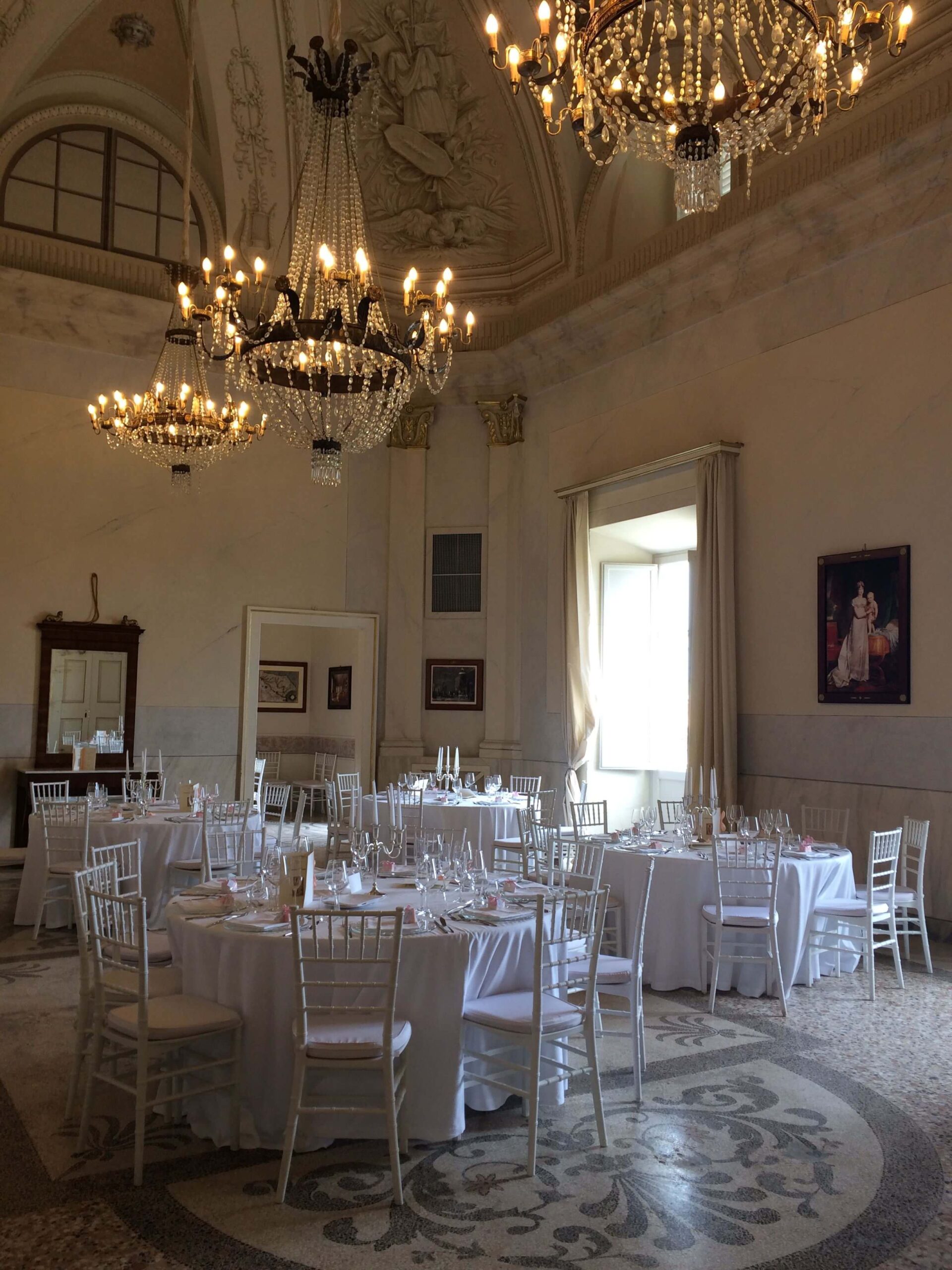
Where you hold your main meal is one of the spaces I’d look at very carefully. Elements to consider are table layout, spacing and how the room will work for your number of guests and how full it will feel.
In terms of logistics, I’d advise asking the venue staff about their recommended table layout for your number of guests, where they suggest positioning the top table, and where speeches would work best.
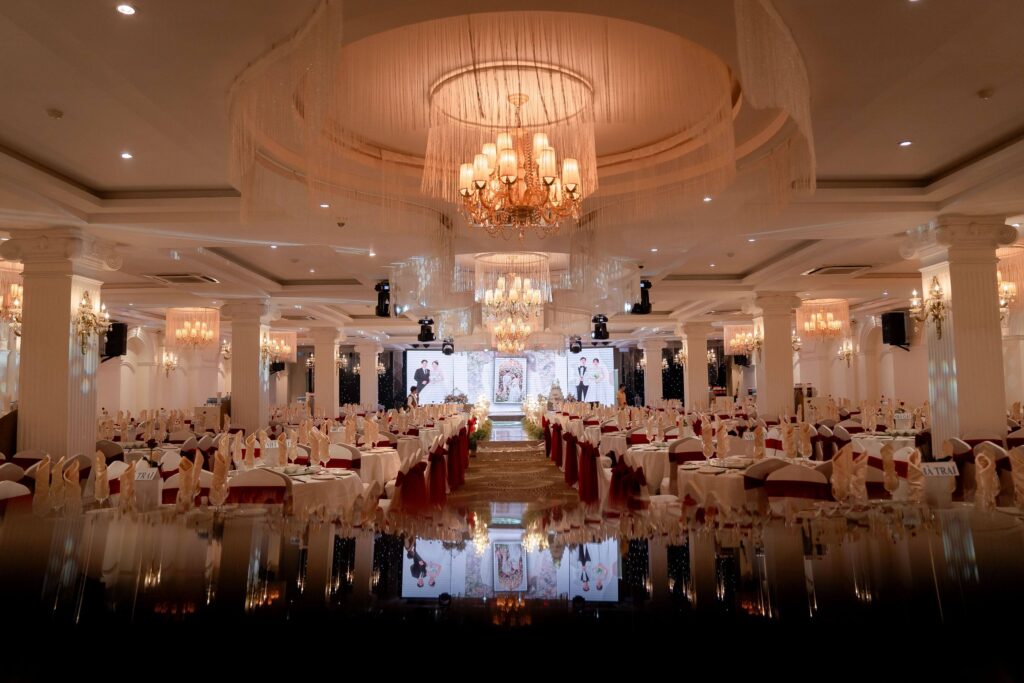
It’s also important to consider the aesthetics of the room. Your style of wedding may need the room to have plenty of character, so your decor can enhance the vibe rather than having to completely create the right atmosphere. If this is the case, look carefully at the furniture and decorations. Do they work for the feel you want for your wedding? Also think about how the room would feel later in the day as the light changes.
6. Evening reception
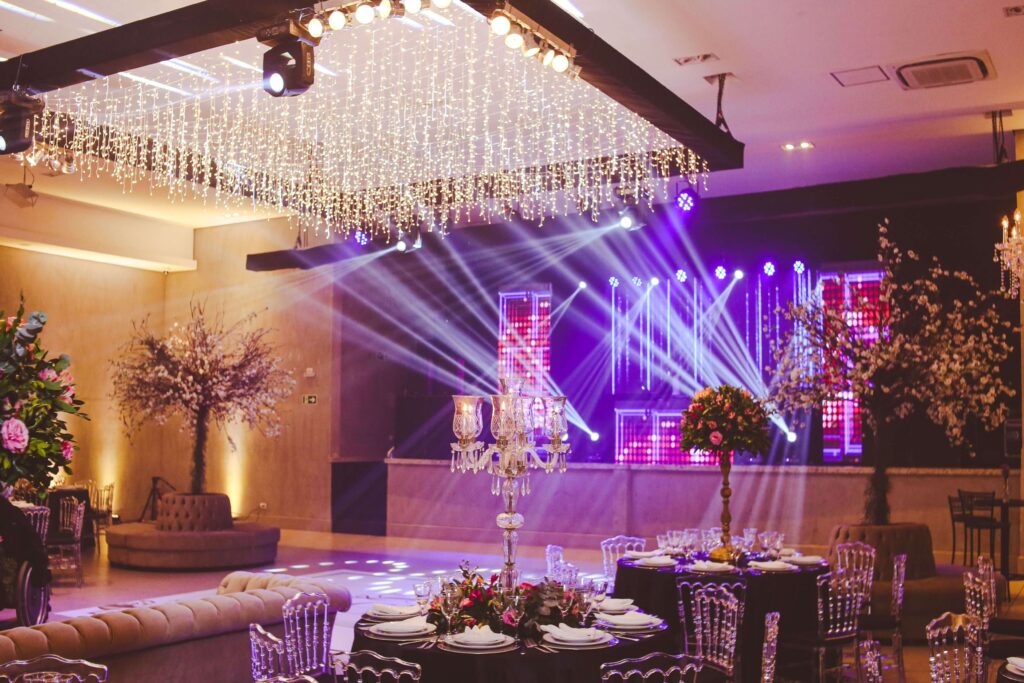
Next up is looking at where you’ll hold the evening part of your wedding. Stand in the space and picture it being used properly. Consider things such as where your band or DJ might be, where the dancefloor would be positioned, and how much space you’ll have for the dancefloor alongside your entertainment set-up.
If the evening reception is in the same room as dinner, ask the venue staff how long it takes to turn the room around, and where guests can go when that’s happening.
Also think about where guests sit and chat if they’re not dancing, and if there’s access to a bar.
7. Accommodation
If you need accommodation for guests and your venue can offer this, it’s important to consider the experience rather than just the number of bedrooms. What are the bedrooms our guests would actually stay in like? Is the standard fairly consistent across the rooms?
When guests aren’t in their rooms, are there spaces other than the formal wedding spaces where they can gather? Is there somewhere residential guests could have a quieter drink once the main celebration finishes?
Overall, consider whether staying at the venue would feel like part of the wedding, and enhance the overall experience.
8. The wedding weekend
If you’re having a weekend/multi-day wedding, you also need to look at how the venue would work for the whole event, not just one day.
You might want a rehearsal dinner the night before for all or some of your guests, so ask the venue staff where this could be hosted. Would it feel different enough from the wedding day? Where could everyone go for a drink afterwards?
For the day after the wedding, consider what events you want to host and if the venue has the right spaces. For example, if you want to do a wedding brunch, how many people could comfortably join? Could it feel relaxed and informal rather than like another organised event? Is there somewhere people could linger afterwards before gradually heading home?
9. Guest experience
Your loved ones will be making a lot of effort to join your celebrations, so you’ll naturally want them to have an amazing time.
With this in mind, try to look at the venue as one of your guests. What will people see first when they arrive? Does moving around the property feel easy and natural? Are there enough comfortable places to sit throughout the day? Do the indoor and outdoor spaces connect well?
Think about the smaller moments too: arriving, finding a drink, wandering outside, sitting by a fire, having a drink and spending time together.
10. The venue team
The hospitality that you experience while you’re visiting the venue is a reflection of what you and your guests will experience on a wedding day, so it’s important to take note of the venue staff themselves.
I would ask yourself the following questions straight after your visit.
“Were you welcomed warmly?”
“Did the person/people showing you around feel polished and presentable?”
“Did they listen to what you’re actually looking for?”
“Did they know the property well?”
“Did their suggestions feel considered rather than rehearsed?”
“Did you feel looked after?”
“Can you picture them welcoming your families and guests in the same way?”
What matters here is whether the level of service feels right for the venue, as well as for the experience you want your guests to have.
Your downloadable venue scorecard
I’ve put together a scorecard that you can use for each venue visit and organise what you’ve seen.
Look at where each venue gained or lost points, and weight them accordingly. A couple of points lost because one bedroom is less impressive is very different from losing them because you don’t connect with the ceremony setting, or the reception space feels compromised.
The numbers are there to help make the differences clearer, rather than making your final decision.

And the biggest piece of advice I have when choosing your wedding venue?
Pay attention to the one you’re both still talking about after your visit. If you can’t get it out of your head and can picture every element of your day there, then that’s the right venue for the start of this exciting next chapter.
As a Scottish wedding planner who specialises in heartfelt, bespoke celebrations, I’d love to talk more about your ideas for your wedding and how I could help bring them to life. Please get in touch for your complimentary consultation.